The Architecture of Apostasy
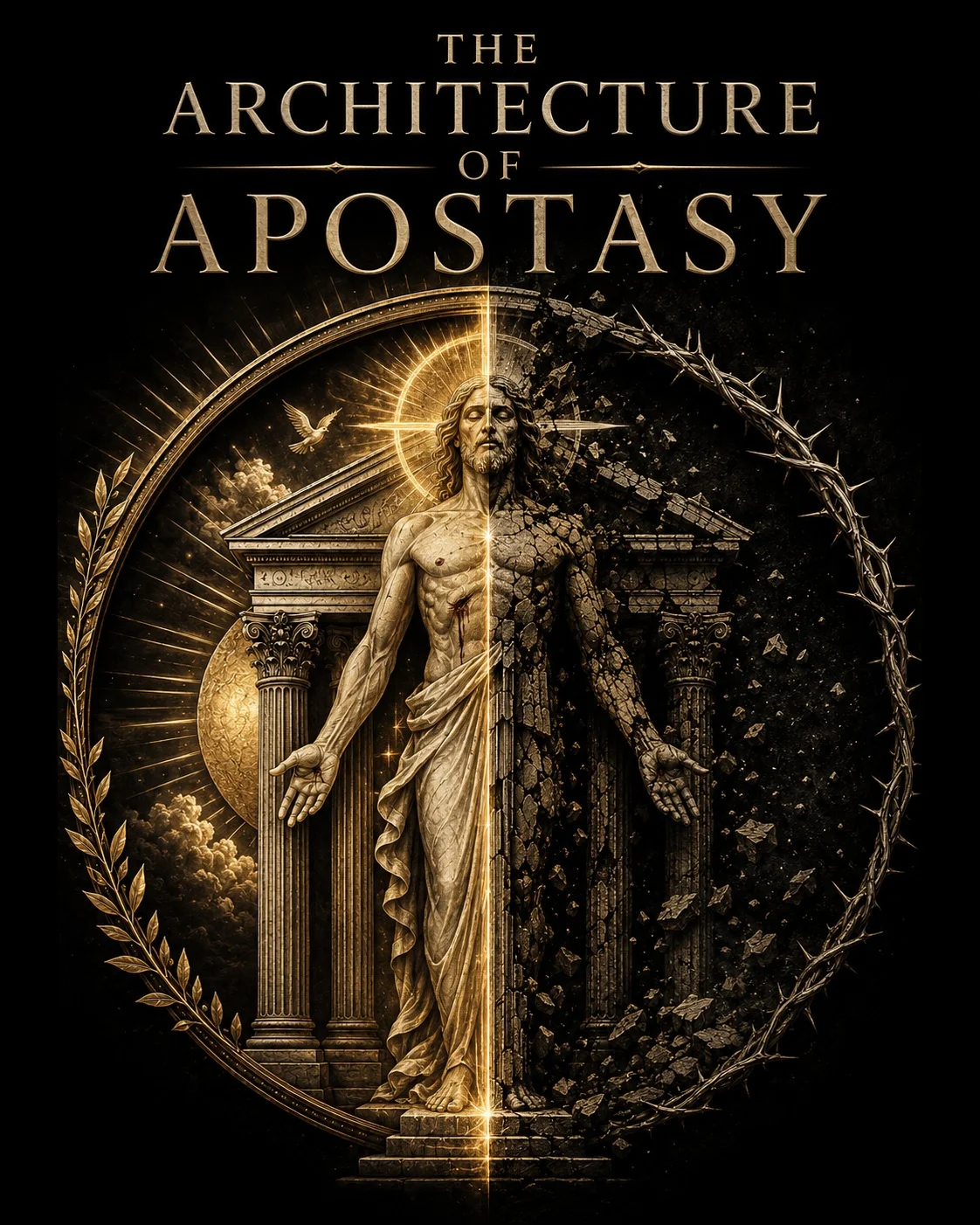
A path to be kept. A keeping under Christ. A measure not our own.
A Christian theological library examining how good gifts, practices, and institutions become idols, and how they are returned to Christ.
Our Christian witness does not ask “What is the correct form?” Instead, we ask how spirit takes flesh, how entrusted good becomes possessed, how faithful forms become apostate bodies, and how keepers remain under Christ rather than becoming the measure themselves.
Within this witness, apostasy is not merely the abandonment of doctrine. It is the condition The Path diagnoses, The Keeping resists, and The Measure returns to Christ.
The Troth is the fidelity of God disclosed and enacted in Jesus Christ: the faithfulness that remains when keepers fail, institutions fail, and vows fail, and return still remains possible.
The Troth remains.
When strength fails? The Troth remains.
When courage fails? The Troth remains.
When wisdom fails? The Troth remains.
When virtue fails? The Troth remains.
When faithfulness fails? The Troth remains.
When the community fails? The Troth remains.
When institutions fail? The Troth remains.
When rulers fail? The Troth remains.
When the body fails? The Troth remains.
And when I fail the Troth? The Troth remains.
How can the Troth remain when I do not? Because the Troth does not depend upon my keeping it. I am kept by the Troth.
Where is this revealed? In Christ.
When Peter denies? The Troth remains.
When Judas betrays? The Troth remains.
When the disciples flee? The Troth remains.
When the authorities condemn? The Troth remains.
When the crowd mocks? The Troth remains.
When the body is broken? The Troth remains.
When the tomb is sealed? The Troth remains.
What does the Resurrection proclaim? The Troth never failed.
What, then, do we confess when all else has failed?
Diagnosis, Fidelity, And Discernment
The Path
The Architecture of Apostasy names the spirit taking flesh. It diagnoses how received gifts, institutions, symbols, and practices become embodied under another lord.
The Keeping
Aru va`en shows how keeping becomes embodied: cry, wound, remaining, fang, fleece, pasture, throne, and the Shepherd.
The Measure
The Measure of Christ keeps the keeper under Christ. It refuses to let courage, suffering, protection, office, or sacrifice become moral title.
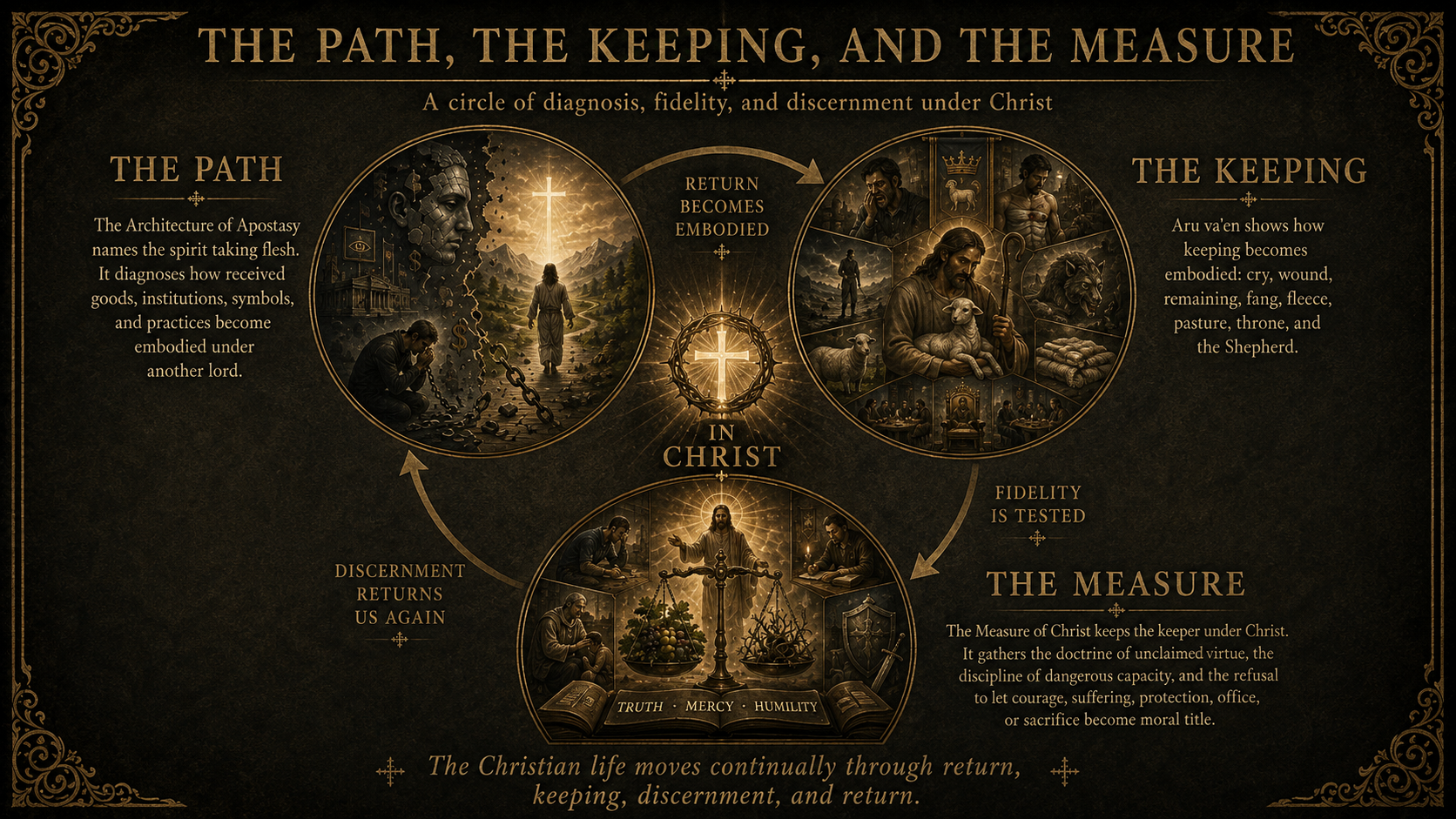
The diagram shows a continuous cycle, not three separate stops: The Path diagnoses what spirit has taken flesh, The Keeping holds that diagnosis in faithful, embodied response, and The Measure returns the keeper to Christ rather than to self-justification — before the cycle begins again.
First Readings
Entry Points
Foundations
Begin with The Path of Re-Embodiment, The Keeping of the Troth, and The Measure of Christ: the three movements that order the public library.
Core Concepts
Discern the vocabulary of spirit, flesh, false logos, apostasy, suffering, repentance, and redemption.
The Path
Walk the path from false logos through suffering, repentance, death to the false self, and re-embodiment in Christ.
The Keeping
Read the Troth as the embodied guard rail: faithfulness under the Shepherd when throne, pasture, fang, and fleece all fail.
The Measure
Keep judgment, strength, office, and protection answerable to Christ through the doctrine of unclaimed virtue.
Reading Paths
Follow curated routes through the library, beginning with diagnosis and moving toward return.
Essays
Read the theological essays as witnesses along the way, not as material for detached mastery.